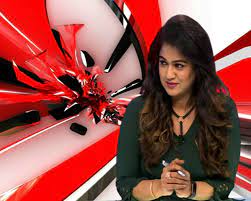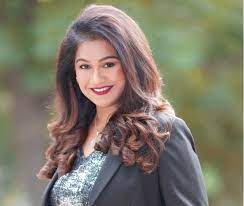
Dr. Kanthi D. Suresh is an Indian sports and education leader whose work has evolved across sports media, sports leadership, sports development and school education.
After more than a decade of working at the intersection of sport, media and athlete development, her current work focuses on an important educational question:
This thinking led to the development of an India-developed, UK CPD-accredited Sports Life Skills Framework for students from Classes 6 to 12, designed to help schools systematically build, assess and evidence important human competencies through sport.
Kanthi began her sports media journey as an anchor with DD Sports in 2008, with one of her earliest major assignments connected with the Beijing Olympics.
Over the following years, her work included major international sporting events such as the Olympic Games, Commonwealth Games and Asian Games.
She subsequently founded Power Sportz, India's first dedicated digital sports news platform, becoming the first woman in India to head a 24×7 sports channel.
Her flagship programme, Talking Turkey with Kanthi, created a platform for conversations around Indian sport, athletes, governance and the challenges within India's sporting ecosystem.
On International Women's Day 2020, the Government of India's MyGovIndia platform recognised her pioneering position as the first woman in India to head a 24×7 sports channel. She was also invited by the BBC as a Game Changer in Sports.
In October 2019, she received an International Excellence Award from former President of India and Bharat Ratna awardee Dr. Pranab Mukherjee.
Kanthi's work subsequently expanded from covering sport to creating sporting platforms.
In 2022, she launched the Global Power Cricket League (GPCL T20), bringing together players and teams with international and Indian-diaspora participation.
In 2023, she established the Holistic International Pravasi Sports Association (HIPSA) and assumed the role of President.
HIPSA was created to use sport as a platform for youth engagement, international sporting collaboration and structured developmental initiatives.
In 2025, HIPSA launched the Global Indian Pravasi Kabaddi League (GI-PKL), bringing men's and women's competition onto a common platform and attracting international participation.
These experiences across media, athletes, leagues and sporting ecosystems eventually led to a broader question:
Can the developmental power of sport be systematically brought into education?
Sport has always been associated with qualities such as resilience, teamwork, communication, discipline, decision-making and leadership.
Yet these outcomes have traditionally remained largely assumed.
A student may participate in sport for several years, but schools generally record participation, sporting performance, tournaments and medals — not necessarily what the student has learnt through those experiences.
Kanthi's work in Sports Life Skills emerged from this gap.
Her approach distinguishes between:
playing sport and learning through sport.
A defeat can become an experience in resilience.
A changing match situation can develop decision-making.
Team dynamics can develop communication and collaboration.
Captaincy can create opportunities for leadership, responsibility and accountability.
The educational opportunity lies in making these experiences intentional, structured, assessable and transferable to life beyond the playing field.
Dr. Kanthi D. Suresh is the Founder of the Sports Life Skills Framework, an India-developed structured learning framework designed for students from Classes 6 to 12.
The framework uses sport and real sporting experiences to develop important human competencies including:
Decision-Making | Resilience | Communication | Teamwork | Leadership | Adaptability | Self-Management | Responsibility | Collaboration | Responsible Citizenship
The age-progressive framework comprises:
7 Levels | 42 Modules | 168 Micro Life Skills
Rather than treating life skills as isolated workshops or theoretical lessons, the framework creates a progressive learning pathway across seven school years.
Sport becomes the experiential environment through which students encounter, understand and apply life skills.
Structured behavioural assessment, student progress reporting and certification help schools move beyond simply providing sporting opportunities towards evidencing what students are developing through those experiences.
The Sports Life Skills initiative is supported by two independent UK CPD accreditations covering student learning and teacher professional development.
The Student Sports Life Skills Framework is accredited by The CPD Group, UK – Provider No. 788856.
HIPSA's associated Teacher Professional Development Programme is accredited by The CPD Certification Service, UK – HIPSA Provider No. 22606.
The framework is implemented through Power Sportz Academy in association with HIPSA.
Explore the CPD UK-Accredited Sports Life Skills Framework for Schools
Kanthi's current education work also explores the changing meaning of future readiness in the age of artificial intelligence.
As AI makes access to information, analysis and technological capability increasingly widespread, she believes the educational differentiator may increasingly lie in the distinctly human capabilities students bring to that technology.
Technology can provide an answer.
A human being must still decide what to do with it.
This has led to a central theme in her current work:
When AI becomes the level playing field, what becomes the cutting edge?
Her work explores how schools can complement academic and technological capability with structured development of the human competencies students will require in an increasingly AI-enabled world.
Kanthi advocates a shift from simply providing holistic opportunities to making the resulting student development more visible.
Schools already provide sport, clubs, experiential activities, leadership opportunities and community engagement.
This philosophy underpins her concept of Evidenced Holistic Education — moving beyond the assumption that activities build life skills towards systematically developing, assessing and demonstrating those outcomes.
The Sports Life Skills Framework represents one application of this philosophy through sport.
Her recent published work examines how the role of schools may evolve as artificial intelligence changes access to knowledge and increases the importance of capabilities that machines cannot easily replace.
In the Age of AI, Are Schools Measuring the Skills Machines Cannot Replace?
Published by HyBiz TV
Ai in Education Skills Machines Cannot Replace/
Dr. Kanthi D. Suresh holds an MBA and Phd and has studied Journalism & Newswriting at the London School of Journalism.
Her professional journey has spanned executive search, sports broadcasting, sports entrepreneurship, international sporting initiatives and education.
This combination of experiences has shaped her current work around a simple proposition:
Education should prepare students not only for academic success, but for the decisions, relationships, challenges and opportunities they will encounter beyond the classroom.
And sport can provide one of the most powerful environments in which those capabilities are developed.